
Most traders bleed cash on the MEXC funding rate without even realizing it. You open a perpetual contract, hold it for days, and watch your PnL shrink. Think of the MEXC funding rate as a hidden toll booth on the derivatives highway. You either pay the fee, or you collect it. We will show you exactly how this mechanism works, how MEXC’s dynamic funding intervals change the math, and three strategies you can use to turn this cost into income.
Long and short traders exchange this periodic fee in perpetual futures to keep the contract price tethered to the underlying asset’s spot price. MEXC’s 2025 derivatives framework sets standard funding intervals at 8 hours, but high-volatility pairs trigger 4-hour cycles. This dynamic timing shifts the math faster than you might expect. When longs dominate the market, they pay shorts—and those fees easily eat up a 5% portfolio gain if you hold the wrong position for a week.
Table of Contents
| Settlement Interval | Time (UTC) | Base Rate Calculation |
| Interval 1 | 00:00 | Interest Rate + (Index – Mark) |
| Interval 2 | 08:00 | Interest Rate + (Index – Mark) |
| Interval 3 | 16:00 | Interest Rate + (Index – Mark) |
What is the MEXC Funding Rates?

Perpetual contracts never expire. Traditional futures use expiration dates to force price convergence with the real world, but perps need a different anchor. The MEXC funding rate acts like a landlord charging rent—it keeps the spot price and the futures price living in the same house. When the perpetual price trades above the spot price, longs pay shorts. When the perpetual price drops below the spot price, shorts pay longs.
You must understand three key prices: the Last Price, the Index Price, and the Mark Price. The Index Price tracks the real-world spot market across major exchanges. The Last Price shows the actual trading price of the MEXC perpetual contract.
The gap between the Last Price and the Index Price creates the Premium Index. This metric drives your funding fee. MEXC calculates the final funding rate by adding this Premium Index to a baseline interest rate—usually 0.01% per 8 hours for major pairs like BTC and ETH. We watch this Premium Index closely. When the Last Price runs too hot above the Index Price, the MEXC funding rate turns positive, punishing the overleveraged side and pulling the contract back down to earth.
MEXC uses the Mark Price as a safety net. The Mark Price calculates a moving average of the Index and Last Prices to prevent unfair liquidations during sudden market wicks. BitMEX introduced the perpetual swap in 2016, and this funding mechanism still tethers the contract to reality today.
How is the MEXC Funding Rate Calculated?
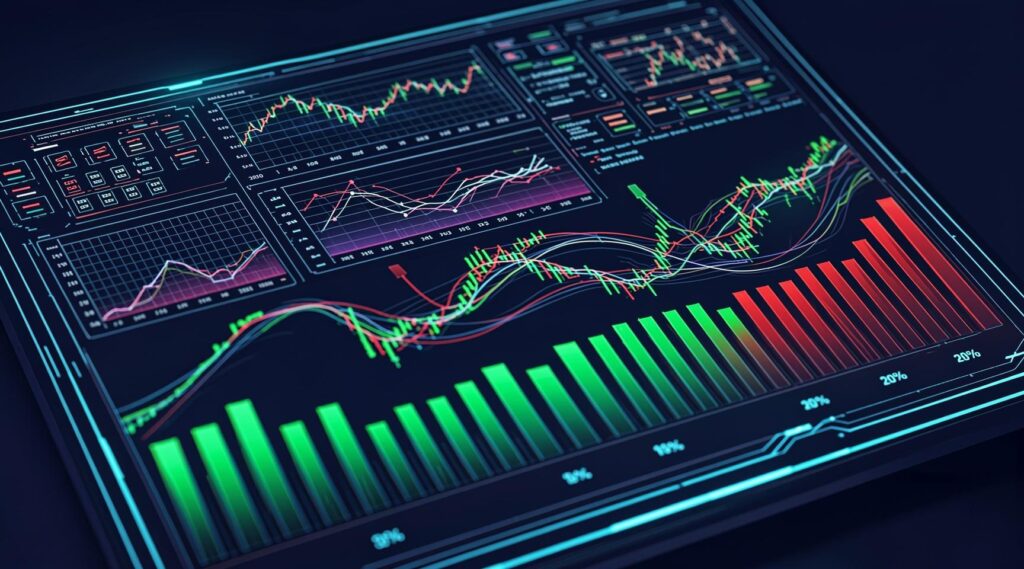
Most exchanges use a flat funding rate. MEXC uses a dynamic funding rate system. Think of it like surge pricing on a ride-share app. When the market goes crazy, the rates scale up aggressively to balance the books.
MEXC calculates the standard rate using the Interest Rate plus the Premium Index. The Premium Index measures the exact gap between the Last Price and the Index Price. During extreme volatility, MEXC triggers dynamic adjustments. If the Last Price drifts too far from the Index, or if open interest spikes, MEXC shortens the funding intervals—sometimes dropping from 8 hours down to 2 hours—and multiplies the rate.
CoinGlass’s 2025 data shows the average BTC funding rate across major exchanges hit 0.050% during the late-year rally, but MEXC’s dynamic caps occasionally pushed rates to 0.150% to cool down overheated leverage. You can review the exact mathematical thresholds in the MEXC Official API Documentation.
Kaiko’s 2025 market data reveals perpetual swaps now drive 88% of total crypto trading volume, making these fee calculations the most important math in crypto. Kaiko’s research proves open interest heavily distorts funding rates; when leverage piles up on one side, the dynamic rate must adjust aggressively to balance the books and prevent market manipulation.
How Often is the MEXC Funding Rate Paid?
MEXC settles standard funding fees every 8 hours, but high-volatility pairs trigger dynamic 4-hour or 2-hour cycles. For standard intervals, MEXC deducts or credits your account at 00:00, 08:00, and 16:00 UTC. Dynamic intervals add extra settlement ticks at 04:00, 12:00, and 20:00 UTC. You only pay or collect the fee if you hold an open position at the exact settlement tick.
Traders often confuse the “Predicted Rate” with the “Actual Rate.” The predicted rate provides a live estimate based on the current Premium Index. The actual rate locks in at the exact settlement second.
While testing the MEXC Pro interface, we watched the Predicted Rate spike 15 minutes before settlement. Traders scramble to close positions and dodge the MEXC funding rate, which rapidly shifts the Premium Index and distorts the live estimate. Do not let that last-minute swing catch you off guard.
Also Read: MEXC Exchange Review 2026: The Ultimate Safety & Fee Test
What Happens When the MEXC Funding Rate is Negative?
A negative funding rate flips the script. Shorts pay longs. Traders aggressively short the market, pushing the perpetual price below the spot price, and this heavy short momentum triggers the negative rate. That negative rate signals oversold conditions.
But it also creates a massive opportunity. Velo Data’s 2025 derivatives tracking shows extreme negative rates reliably predict short squeezes. When shorts overcrowd a trade, they bleed capital to longs every single funding tick.
If shorts pay a -0.10% rate every 8 hours, they lose 0.30% of their position size daily just to hold the trade. When the rate goes deeply negative, any sudden price spike forces overconfident shorts to buy back in simultaneously. This creates a chain reaction. We watched this exact dynamic hit meme coins like WIF and PEPE in early 2024. The MEXC funding rate plunged below -0.10% as traders crowded the short side, but a slight upward tick forced shorts to cover their positions, igniting a rapid price explosion that trapped aggressive sellers.
How to Check Current MEXC Funding Rates
You need solid data to make smart decisions. Finding the rate on MEXC takes just a few clicks.
Open your desired futures pair on the MEXC Pro desktop interface. Look above the order book in the top right corner. You will spot the “Funding Rate / Countdown” tab. Click the expand icon to reveal the predicted versus actual rate history. On the MEXC mobile app, tap your specific futures pair. Tap the rate indicator next to the Mark Price to expose the current rate and the next settlement time.
We always skip the app for deep historical data and use third-party trackers. Coinglass and Velo Data deliver real-time comparisons. You can stack MEXC’s rate against Binance and Bybit side-by-side.
Open Interest tracks the total number of outstanding contracts, and MEXC’s 2025 market data shows this metric surged over 85% year-over-year for USDT-margined futures. You must track Open Interest alongside the MEXC funding rate. Rising Open Interest plus an extreme funding rate proves new money enters the market aggressively, making these third-party trackers essential to visualize the trap before it springs.
3 Strategies to Profit from MEXC Funding Rates
We treat the MEXC funding rate as a yield source rather than a fee. MEXC offers three clear ways to capture this yield.

Funding Rate Arbitrage (Cash and Carry Trade)
You buy the asset in the spot market and short the exact same asset in the perpetual market. You stay market-neutral. When the MEXC funding rate turns positive, longs pay shorts. You collect the fee.
We like to think of this as picking up pennies in front of a steamroller—the yields stay steady, but you must watch your step. During the 2024 BTC rally, cash-and-carry arbitrage routinely delivered 8% to 15% annualized yields. MEXC’s zero-maker-fee structure boosts these returns, saving you the basis points that other exchanges take.
Delta Neutral Yield Farming
You pair DeFi platforms with MEXC futures. You supply liquidity on-chain to earn a base APY. Then, you hedge that exposure by taking an opposite position on MEXC futures to collect the funding rate.
If you supply ETH into Aave for a 3% base APY and hedge with a short on MEXC capturing a 0.05% funding rate, you stack both yields. You double-dip your returns while keeping your price exposure flat.
Trend Following via Rate Extremes
You use historically high rates as contrarian indicators. When the MEXC funding rate hits extreme highs—like 0.3%—the market overleverages on the long side. You prepare for a long squeeze or a sharp reversal. In March 2024, BTC funding rates across major exchanges spiked past 0.15% right before a 15% price correction wiped out overleveraged longs. High rates signal top-heavy markets.
When we set up a delta-neutral position on MEXC to capture a 0.05% funding rate, the actual yield after MEXC’s tiered adjustment dropped to 0.038%. The dynamic scaling ate a chunk of our expected profit. Griffin Ardern, Data Analyst at OKX, drives this point home: “Cash-and-carry arbitrage sounds risk-free on paper, but slippage and taker fees will eat your profits if you aren’t calculating the spread down to the basis point.”
Also Read: MEXC Exchange Review 2026: The Ultimate Safety & Fee Test
The Hidden Risks of MEXC Funding Rates
The MEXC funding rate carries heavy risks. We want you to see the traps before you step into them.
Auto-Deleveraging (ADL) on MEXC
When liquidity dries up, MEXC triggers Auto-Deleveraging. The exchange forcefully closes your profitable position to cover the losses of bankrupt traders. If a massive wick wipes out liquidity and the insurance fund falls short, ADL hits you. We view ADL like a trapdoor covered by a rug—just when you think your trade is safe, the floor vanishes.
MEXC displays an ADL indicator on your trading dashboard. Watch this ranking closely; it shows your risk level before the exchange forces your hand.
The Math of Friction in Arbitrage
Arbitrage sounds safe until you calculate friction. Slippage and taker fees erode your gains. We executed a cash-and-carry arbitrage trade on MEXC and documented the exact slippage and taker fees that ate into our funding profits. We expected a clean 0.1% yield, but taker fees on entry and exit slashed our actual profit to 0.04%.
CoinShares’ 2024 Digital Asset Report shows basis trade arbitrage strategies deliver 8-12% annualized returns in low-volatility markets, but transaction fees cut actual yields by up to 25%. MEXC charges 0.01% for takers and 0.00% for makers. Always use limit orders to hit the maker rate, and always check the MEXC Official Fee Schedule before you execute.
Also Read: MEXC Exchange Review 2026: The Ultimate Safety & Fee Test
Frequently Asked Questions About MEXC Funding Rates
Q: Are MEXC Funding Fees Tax Deductible?
A: Your local tax laws dictate the answer. Under US IRS guidelines, funding fees you pay adjust your cost basis—they reduce your capital gains when you sell. Funding fees you receive boost your proceeds, which increases your capital gains. You must track every single fee. We recommend crypto tax platforms like CoinTracker or Koinly to handle the math, but always consult a crypto-specific tax professional for your exact situation.
Q: Does MEXC Charge Funding Fees on Weekends?
A: Yes. MEXC runs its 8-hour settlement cycle 24/7. Crypto markets never sleep, so weekends and holidays never pause the funding rate mechanism. You will see settlements hit your account at 00:00, 08:00, and 16:00 UTC every single day.
Q: How does MEXC’s Tiered Rate differ from Binance’s standard rate?
A: Binance enforces a hard cap on standard funding rates at 0.75%. MEXC takes a different path. MEXC deploys a tiered, dynamic system that scales rates without a hard cap during extreme market conditions. During the 2024 meme coin surges, MEXC rates spiked past 1% to force price convergence faster. Binance protects you from extreme fees; MEXC forces market balance.
Q: Does holding MX Token reduce my funding rate?
A: No. Holding MX tokens slashes your spot and futures trading fees, but it does not touch the MEXC funding rate. Funding rates move strictly between traders—you pay other traders, not MEXC. Market conditions and the tiered threshold dictate the rate, not your token holdings.
Q: Does MEXC have zero-fee trading for futures?
A: MEXC offers zero maker fees on futures as a standard feature, not just a limited promotion. However, taker fees (typically 0.01%) and funding rates still apply. You cannot escape the funding fee. Traders pay other traders to hold their positions, and the exchange collects the taker fee on the execution.
Final Thoughts on the MEXC Funding Rate
We treat the MEXC funding rate as more than a fee—we treat it as a market signal and a yield source. You must understand MEXC’s tiered system. MEXC scales rates aggressively during volatility, while Binance sticks to a flat 0.75% cap.
Slippage and taker fees will evaporate your arbitrage profits if you ignore them. You must track the difference between predicted and actual rates in the 30 minutes before settlement. The Block Research shows derivatives drive over 70% of total crypto volume in 2025. As these markets grow more complex, dynamic tiered rates will become the industry standard.
Rate literacy gives you your biggest edge. Open a MEXC Demo Trading account today. Track the funding rate dashboard for a full week before you deploy real capital.